
Automated External Defibrillators (AEDs): How They Work, When to Use Them & Why They Save Lives
An automated external defibrillator, or AED, is a portable device that checks a person’s heart rhythm and delivers an electric shock when needed to restore a normal rhythm. It is built for use by everyday people, not just medical professionals.
An automated external defibrillator, or AED, is a portable device that checks a person’s heart rhythm and delivers an electric shock when needed to restore a normal rhythm. It is built for use by everyday people, not just medical professionals.
Minutes matter during sudden cardiac death. A fast response with CPR and an AED can mean the difference between life and death, which is why these devices now sit in schools, offices, airports, and gyms across the country.
This guide covers how an AED works, when to use one, how to use it correctly, and how to care for a device over time.
This article is for general education and does not replace formal CPR and AED training or advice from your doctor.
What Is an Automated External Defibrillator (AED)?
An AED is a compact medical device designed to analyze a person’s heart rhythm during a cardiac emergency and deliver an electric shock if the rhythm is one that responds to defibrillation. The goal is to stop a chaotic, ineffective heart rhythm long enough for the heart’s natural pacemaker to restart a normal beat.
It helps to understand the difference between a heart attack and cardiac arrest. A heart attack happens when blood flow to part of the heart is blocked. Cardiac arrest happens when the heart’s electrical system malfunctions and the heart stops pumping effectively. A person can go into cardiac arrest during a heart attack, but the two are not the same thing. AEDs are built specifically to treat cardiac arrest.
How Does an AED Work?
Once turned on, an AED walks the user through voice and visual prompts. After the pads are attached, the device analyzes the heart’s rhythm automatically.
Some rhythms are considered shockable, meaning an electric shock has a real chance of restoring a normal pattern. Certain arrhythmias fall into this category. If the device detects a shockable rhythm, it will advise a shock and guide the user through delivering it safely. If the rhythm is not shockable, the AED will not allow a shock to be delivered, which protects against harm.
Modern AEDs run automatic safety checks in the background, confirming the device and pads are working correctly before and during use.
When Should You Use an AED?
Use an AED when someone shows signs of sudden cardiac arrest, including:
- Complete unresponsiveness
- No normal breathing, or only gasping
- Sudden collapse with no clear cause
This can happen in public places, during sports events, at work, in schools, at airports, or in shopping malls and community centers. Anytime someone collapses and shows these signs, calling for help and getting an AED should happen immediately.
Who Can Use an AED?
AEDs are built for use by the general public, not only trained professionals. First responders, healthcare workers, workplace staff, teachers, coaches, and family members can all use one safely, since the device guides the user step by step through the entire process.
CPR training helps but is not required to use an AED effectively. The voice prompts are designed to walk an untrained bystander through the process during a real emergency.
How to Use an AED
Step 1: Make sure the scene is safe before approaching.
Step 2: Call emergency services immediately, or have someone else call while you begin care.
Step 3: Begin CPR right away if the person is unresponsive and not breathing normally.
Step 4: Send someone to retrieve the nearest AED, or get it yourself if you are alone.
Step 5: Turn the AED on and follow the voice prompts.
Step 6: Expose the person’s bare chest.
Step 7: Attach the AED pads to the chest exactly as shown in the diagram on the pads.
Step 8: Allow the device to analyze the heart rhythm without touching the person.
Step 9: Deliver a shock if the AED advises one, making sure no one is touching the person.
Step 10: Resume CPR immediately after the shock, or right away if no shock is advised.
Step 11: Continue this cycle until emergency responders arrive and take over.
AED Pad Placement
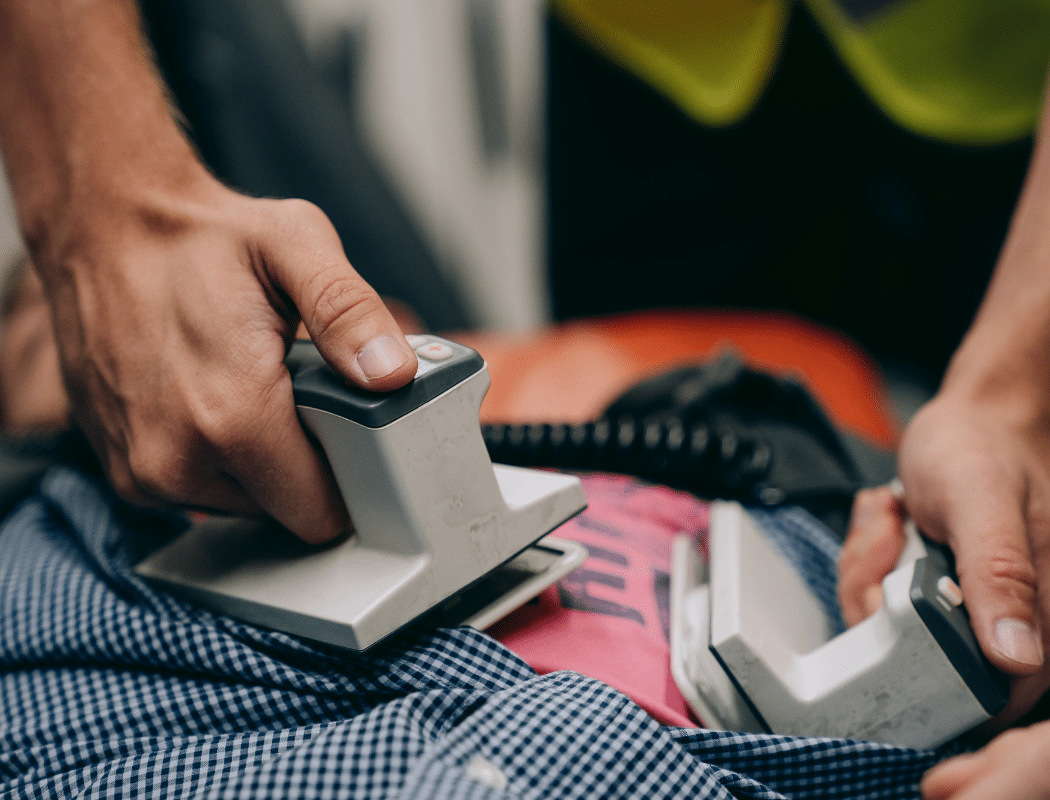
Standard adult pad placement puts one pad on the upper right chest and the other on the lower left side, below the armpit. Pediatric pads or a pediatric setting are used for children when available, since a smaller shock dose is appropriate for their size.
If the person’s chest is wet, quickly dry it before applying pads, since moisture can interfere with the shock delivery. For a very hairy chest, quickly shaving the area with a razor from the AED kit helps the pads make good contact. If the person has a visible pacemaker or implanted device, place the pad at least an inch away from it. Remove any medication patches from the chest before placing AED pads.
When Should You NOT Use an AED?
Do not use an AED if the person is responsive, breathing normally, or has a pulse. Do not use it in standing water or if the person is lying in a puddle, since this creates a safety hazard. Move the person to a dry area first if possible.
Incorrect pad placement can reduce effectiveness, so always follow the diagram on the pads carefully. A common misconception is that AEDs can accidentally shock a healthy heart, but the device will not deliver a shock unless it detects a shockable rhythm.
AED vs Manual Defibrillator
| Feature | AED | Manual Defibrillator |
| User | General public, first responders | Trained medical professionals |
| Training required | Minimal | Extensive |
| Rhythm analysis | Automatic | Manual interpretation required |
| Shock delivery | Automatic or semi automatic, guided by prompts | Manually selected and delivered |
| Typical settings | Simple, pre set | Adjustable by trained user |
| Use locations | Public spaces, workplaces, homes | Hospitals, ambulances |
| Cost | Lower | Higher |
| Portability | Highly portable | Portable but bulkier |
Fully Automatic vs Semi-Automatic AED
| Feature | Fully Automatic AED | Semi-Automatic AED |
| Shock delivery | Delivered automatically once advised | User presses a button to deliver the shock |
| Ease of use | Slightly easier, less user action required | Still simple, with one extra step |
| Advantages | Fewer steps for the rescuer | Gives the rescuer final control over shock timing |
| Limitations | Less rescuer control | Requires the rescuer to act quickly when prompted |
| Best use cases | Public settings with minimal training | Workplaces with some staff training |
Benefits of Automated External Defibrillators
AEDs offer several important benefits:
- Higher survival rates when used quickly after collapse
- Simple enough for non medical users to operate safely
- Highly portable and easy to store
- Fast treatment during a critical window
- Clear voice guidance throughout the process
- Safe operation, since shocks are only advised when appropriate
- Minimal training required to use one effectively
Where Should AEDs Be Located?
AEDs should be placed in locations with high foot traffic or higher risk of cardiac emergencies, including:
- Schools
- Offices
- Gyms
- Airports
- Hotels
- Churches
- Stadiums
- Community centers
- Shopping centers
- Healthcare facilities
- Public transportation hubs
AED Maintenance
Routine maintenance keeps an AED ready for use, including:
- Battery replacement according to the manufacturer’s schedule
- Tracking electrode pad expiration dates
- Monthly visual inspections
- Reviewing the device’s self test indicator
- Cleaning the exterior as needed
- Storing the device within the recommended temperature range
- Keeping a maintenance log for accountability
How Much Does an AED Cost?
Typical AED purchase prices vary based on brand and features. Additional costs include replacement pads, batteries, carrying cases, and optional training programs. Ongoing maintenance costs are generally low but should be factored into long term ownership, especially for organizations maintaining multiple devices across a facility.
Can You Buy an AED for Home?
Home AED ownership can make sense for high risk individuals, especially those with a strong family history of cardiac events or a specific recommendation from their physician. Advantages include immediate access during an emergency, while limitations include the cost and the need for household members to know how to use the device. Consider your specific risk factors, budget, and comfort level before purchasing one for home use.
Common AED Myths
Most ABI devices sold in the United States carry FDA clearance, meaning they have demonstrated performance similar to existing cleared devices. Look for devices backed by clinical validation studies and recognized quality certifications.
Following current guidance from organizations such as the American Heart Association and the American College of Cardiology helps ensure your screening program aligns with accepted PAD screening practices.
Reimbursement and CPT Codes
ABI testing is often reimbursed by Medicare and other insurance plans when medical necessity is documented properly. Correct use of CPT codes and clear clinical documentation supports smooth billing and reduces the chance of denied claims. Staff should stay current on any updates to coding requirements from the Centers for Medicare and Medicaid Services.
How to Choose the Right ABI Device
Choosing the right device depends on a few key factors specific to your practice.
Clinic size and patient volume. High volume clinics often benefit most from automated systems that speed up testing.
Budget. Smaller practices with lower volume may find a manual Doppler system more cost effective.
Required features. Consider whether you need PVR, wireless connectivity, or advanced reporting software.
Specialty. Vascular labs may want more detailed waveform analysis, while primary care offices often prioritize speed and simplicity.
EMR compatibility. Confirm the device integrates smoothly with your existing record system before purchasing.
Staff training level. Automated systems reduce training needs, while manual systems require a skilled, experienced technician for consistent results.
Final Thoughts
ABI testing plays an important role in catching peripheral artery disease before it leads to more serious problems. Choosing the right device, whether automated or manual, comes down to matching your practice’s volume, budget, and workflow needs.
This kind of early screening fits into a much larger picture of proactive heart and vascular care. Programs built around the BaleDoneen Method combine tools like ABI testing with advanced cardiovascular testing and other diagnostic tools, including ECG and EKG machines and coronary angiography equipment, to build a full, personalized picture of a patient’s cardiovascular and vascular health.