
Cardiac Monitors: Types, Uses, Benefits & How They Work
A cardiac monitor tracks your heart’s electrical activity over time. Unlike a single office visit, these devices catch what happens during everyday life, which matters because many heart rhythm problems come and go without warning.
Doctors rely on cardiac monitors to catch these hidden patterns. A rhythm problem that never shows up during a short office visit can appear clearly over a day, a week, or even months of continuous tracking.
This guide covers how cardiac monitors work, the different types available, how long each one lasts, what conditions they detect, and how to choose the right one based on your symptoms.
What Are Cardiac Monitors?
A cardiac monitor is a device that records your heart’s electrical activity, usually over an extended period of time. This differs from a standard electrocardiogram, which captures only a short snapshot of your heart’s rhythm during a single office visit.
Continuous or extended monitoring matters most for intermittent problems, rhythm changes that come and go rather than staying constant. A heart that beats normally during a quick office check can still have irregular episodes during daily activity, sleep, or stress, and these devices are built to catch exactly that.
How Cardiac Monitors Work
ECG Signal Detection
Cardiac monitors detect the small electrical signals your heart produces with every beat. These signals travel through your body and reach the skin, where sensors pick them up.
Electrodes and Sensors
Small adhesive electrodes attach to your chest and connect to the monitor, either through wires or built directly into a wearable patch. These sensors capture the raw electrical signal for recording.
Continuous Rhythm Recording
Some monitors record every single heartbeat throughout the wear period, creating a complete picture of your heart rhythm over time.
Event Triggered Recording
Other monitors only record when you press a button during symptoms, or when the device automatically detects an irregular pattern.
Wireless Data Transmission
Many modern monitors send data wirelessly to a receiver, smartphone app, or directly to a monitoring center, allowing your care team to review results without waiting for you to return the device.
AI Assisted Rhythm Interpretation
Newer systems use software to automatically flag likely abnormal rhythms, helping technicians and doctors review large amounts of data more efficiently.
Types of Cardiac Monitors
Holter Monitor
A Holter monitor records continuously for 24 to 48 hours through electrodes attached to your chest and a small recording device you wear on a strap or clip.
This works best for patients with frequent symptoms, since the short wear time means occasional or rare events might be missed. The main advantage is a complete, continuous record during the wear period. The main limitation is its short duration compared to other options.
Event Monitor
A cardiac event monitor is worn for a longer period, often between 2 and 30 days. Rather than recording constantly, it activates when you press a button during symptoms or when it detects an irregular rhythm on its own.
This helps connect specific symptoms directly to what your heart was doing at that exact moment. The tradeoff is that very brief or symptom free irregular rhythms might not get captured if you do not notice symptoms in time to trigger a recording.
Patch Monitor
Patch monitors, such as the Zio Patch, use a wearable adhesive sensor placed directly on the chest. These devices are often more comfortable than wired Holter monitors and many are fully waterproof.
Patch monitors can be worn for up to 14 to 30 days, and their comfort and simplicity often lead to better patient compliance compared to older wired systems.
Mobile Cardiac Telemetry (MCT)
Mobile cardiac telemetry provides continuous remote monitoring with automatic detection of abnormal rhythms. When the system detects a concerning pattern, it can alert your care team in real time, allowing for a faster response than monitors that only store data for later review.
Implantable Loop Recorder (ILR)
An implantable loop recorder is a small device placed under the skin of the chest during a brief outpatient procedure. Devices such as the Medtronic LINQ and Abbott Assert-IQ can monitor heart rhythm continuously for several years.
This option works well for patients with unexplained fainting or a stroke of unknown cause, since it can capture rare events that might only happen once every few months.
Bedside Cardiac Telemetry
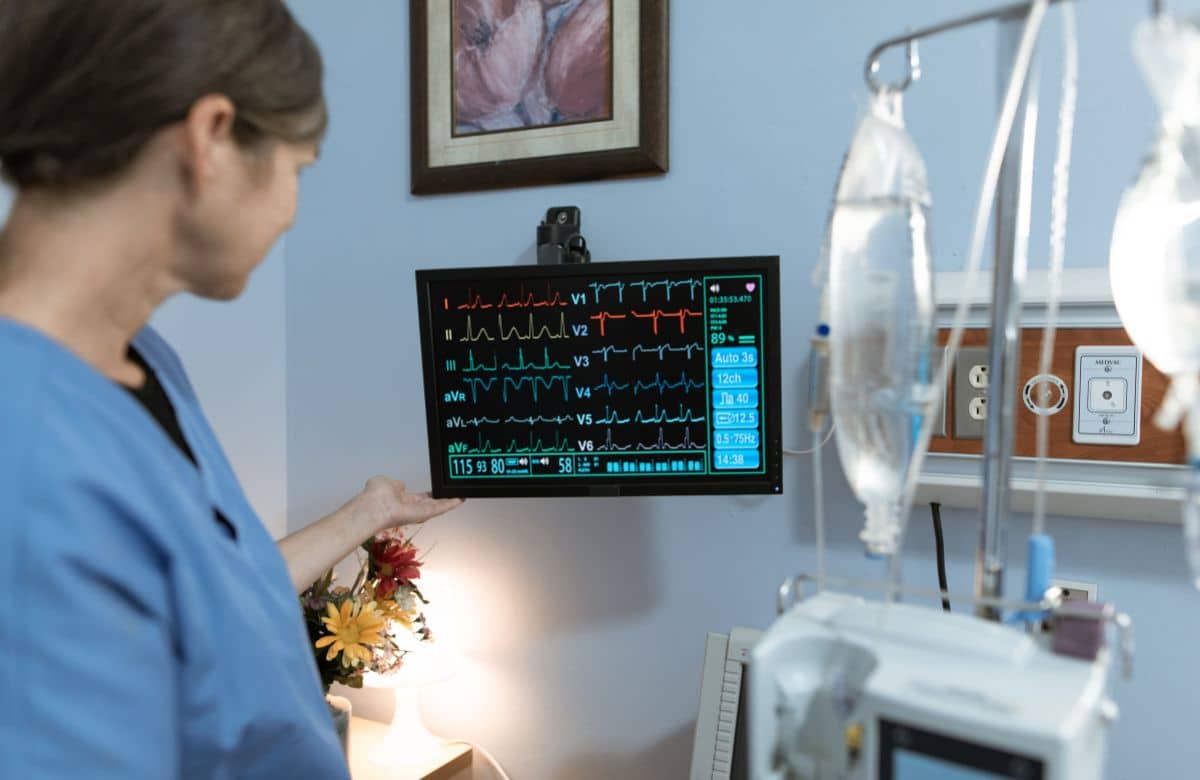
In hospitals, bedside cardiac telemetry continuously tracks heart rhythm for patients in the ICU or emergency department. This gives medical staff immediate alerts if a dangerous rhythm develops while a patient is under close inpatient care.
Conditions Cardiac Monitors Help Diagnose
Cardiac monitors help identify a wide range of conditions, including:
- Atrial fibrillation
- Bradycardia
- Tachycardia
- Premature ventricular contractions
- Supraventricular tachycardia and other arrhythmias
- Ventricular arrhythmias
- Heart block
- Fainting episodes
- Palpitations
- Chest pain evaluation
- Stroke risk assessment
- Monitoring after a stroke has already occurred
Who Needs a Cardiac Monitor?
Doctors often recommend cardiac monitoring for patients with:
- Frequent palpitations
- Unexplained dizziness
- Fainting episodes
- A noticeably irregular heartbeat
- Chest discomfort with an unclear cause
- A history of stroke
- High overall cardiac risk
- A need to monitor how well a heart medication is working
- Follow up after a heart ablation procedure
Cardiac Monitor Duration
| Monitor Type | Typical Wear Time |
| Holter monitor | 24 to 48 hours |
| Extended Holter | Up to 7 days |
| Event monitor | 2 to 30 days |
| Patch monitor | 7 to 30 days |
| Mobile telemetry | 2 to 30 days |
| Implantable loop recorder | Up to 3 to 6 years |
Doctors choose the right duration based on how often symptoms occur. Frequent daily symptoms may only need a short Holter monitor, while rare, unpredictable episodes often call for a patch, telemetry system, or an implantable device that can wait patiently for months or years until something happens.
Cardiac Monitors vs Holter Monitors
| Factor | General Cardiac Monitors | Holter Monitor |
| Recording method | Continuous or event triggered, depending on type | Continuous only |
| Monitoring duration | 2 days to several years, depending on type | 24 to 48 hours |
| Best use | Rare or unpredictable symptoms | Frequent, daily symptoms |
| Comfort | Often improved with patch designs | Wired leads can feel bulkier |
| Accuracy | High, especially with longer wear time | High during the short wear period |
| Cost | Varies widely by device type | Generally lower cost |
| Continuous recording | Depends on device type | Always continuous |
| Symptom triggered recording | Available in event and telemetry monitors | Not available |
A Holter monitor is really one specific type of cardiac monitor, best suited for frequent symptoms over a short window. Other cardiac monitoring options extend that window significantly when symptoms are rare or unpredictable.
Cardiac Monitor Results
Normal findings show a steady, regular heart rhythm throughout the recording period with no concerning patterns.
Common abnormal findings include:
- Atrial fibrillation episodes
- Frequent premature ventricular contractions
- Bradycardia, where the heart beats too slowly
- Tachycardia, where the heart beats too fast
- Pauses in the heart’s normal rhythm
- Heart block, where electrical signals are delayed or blocked
Cardiologists review the full recording, noting how often abnormal patterns occurred, how long they lasted, and whether they lined up with any symptoms you experienced during the wear period. This detailed picture often shapes treatment decisions going forward, especially for patients recovering from a heart attack who may be watched closely for arrhythmias after a heart attack.
Benefits of Cardiac Monitoring
Cardiac monitoring offers real value for both patients and doctors:
- Detects intermittent arrhythmias that a short office visit would miss
- Improves overall diagnostic accuracy
- Supports early stroke prevention by catching hidden atrial fibrillation
- Leads to earlier, more targeted treatment
- Offers non invasive options for most patients
- Enables remote monitoring without frequent office visits
- Supports better long term management of known heart conditions
Limitations
Cardiac monitors also come with some drawbacks worth understanding:
- Skin irritation from adhesive electrodes or patches
- Motion artifacts that can interfere with recording quality
- Battery limitations on longer wear devices
- The chance of missing very rare events, even with extended monitoring
- Compliance issues if a device is uncomfortable or inconvenient to wear
- Small procedural risks with implantable devices
- Occasional false positive readings that require further review
Preparing for Cardiac Monitoring
A few simple steps help ensure accurate results:
- Follow specific showering instructions provided with your device, since some are waterproof and others are not.
- Clean and dry your skin properly before electrode placement.
- Wear loose, comfortable clothing that allows easy access to the device.
- Follow any activity restrictions your doctor recommends.
- Keep a symptom diary noting the time and nature of any symptoms you experience.
- Handle the device carefully and avoid pulling on wires or the patch.
Living With a Cardiac Monitor
Most cardiac monitors fit easily into daily life. You can usually continue normal activities, including work and mild exercise, unless your doctor advises otherwise.
Sleeping with a monitor is generally fine, though wired systems may feel slightly awkward at first. Waterproof patch monitors allow normal showering, while wired Holter systems often require you to avoid water during the wear period.
Traveling with a cardiac monitor is generally safe. Most devices are not affected by airport security scanners, though carrying your device documentation can help if questions come up during screening. Mobile phones typically do not interfere with modern cardiac monitors, though your doctor can address any specific concerns for your device.
Cost of Cardiac Monitors
Costs vary significantly across monitor types.
- Holter monitoring tends to be the most affordable option due to its short wear time.
- Event monitoring costs more due to the longer wear period and added technology.
- Patch monitoring often falls in a similar range to event monitoring, depending on the brand and duration.
- Implantable monitors carry higher costs due to the procedure required for placement.
Insurance, including Medicare, often covers cardiac monitoring when ordered by a doctor for a documented medical reason. Costs can still vary based on your specific plan, provider, and geographic location.
Accuracy of Cardiac Monitors
Cardiac monitors are generally very accurate, particularly with continuous recording over a longer wear time. Devices with AI assisted analysis help flag likely abnormal rhythms quickly, though a trained specialist still reviews the full recording to confirm findings. Diagnostic yield, meaning the chance of catching a meaningful abnormal rhythm, generally improves with longer monitoring periods, which is one reason doctors sometimes choose extended or implantable options for rare symptoms.
Future of Cardiac Monitoring
Cardiac monitoring technology continues to advance quickly. Emerging trends include:
- More advanced AI powered ECG interpretation
- Expanded remote monitoring capabilities
- Lighter, more comfortable wearable technology
- Smartphone based ECG features
- Cloud based reporting shared directly with care teams
- Predictive analytics that flag risk before a major event occurs
- Broader integration with overall digital health platforms