
Cardiopulmonary Bypass Machine: Components, Uses & How It Works
A cardiopulmonary bypass machine takes over the job of the heart and lungs during open heart surgery. It keeps oxygen rich blood flowing through the body while the surgical team works on a heart that has been temporarily stopped.
This machine, often called a heart lung machine, makes many complex heart surgeries possible. Without it, surgeons could not safely operate on a still, bloodless heart.
This guide covers how the machine works, its main components, the surgeries that require it, and what patients can expect during recovery.
This article is for general education and does not replace advice from your cardiac surgeon or care team. Always discuss your specific procedure and risks with your medical team.
What Is a Cardiopulmonary Bypass Machine?
A cardiopulmonary bypass machine, or heart lung machine, is a device that temporarily takes over the function of the heart and lungs during certain cardiac surgeries. It pumps and oxygenates blood outside the body, allowing surgeons to operate on a still heart with a clear, bloodless field.
This technology plays a central role in modern open heart surgery, making it possible to safely perform complex procedures on the heart that would otherwise be impossible with a beating heart in the way.
How a Cardiopulmonary Bypass Machine Works
Connecting the Patient
Before bypass begins, the surgical team places cannulas into large blood vessels to connect the patient to the machine.
Blood Drainage
Blood drains from the body, typically through the large veins near the heart, and flows into the bypass circuit.
Oxygenation Process
The blood passes through an oxygenator, which adds oxygen to the blood much like the lungs normally would.
Carbon Dioxide Removal
At the same time, the oxygenator removes carbon dioxide from the blood, mimicking the gas exchange that normally happens in the lungs.
Blood Pumping
A pump moves the oxygenated blood forward through the circuit, taking over the pumping role normally performed by the heart.
Temperature Control
A heat exchanger regulates the blood’s temperature, often cooling the body slightly during surgery to reduce oxygen demand, then rewarming it before the procedure ends.
Returning Blood to the Body
Once processed, the oxygenated, temperature controlled blood returns to the body through the arterial cannula, continuing circulation throughout the surgery.
Main Components of a Cardiopulmonary Bypass Machine
Venous Cannula
This tube drains blood from the body into the bypass circuit.
Arterial Cannula
This tube returns oxygenated blood back into the patient’s circulation.
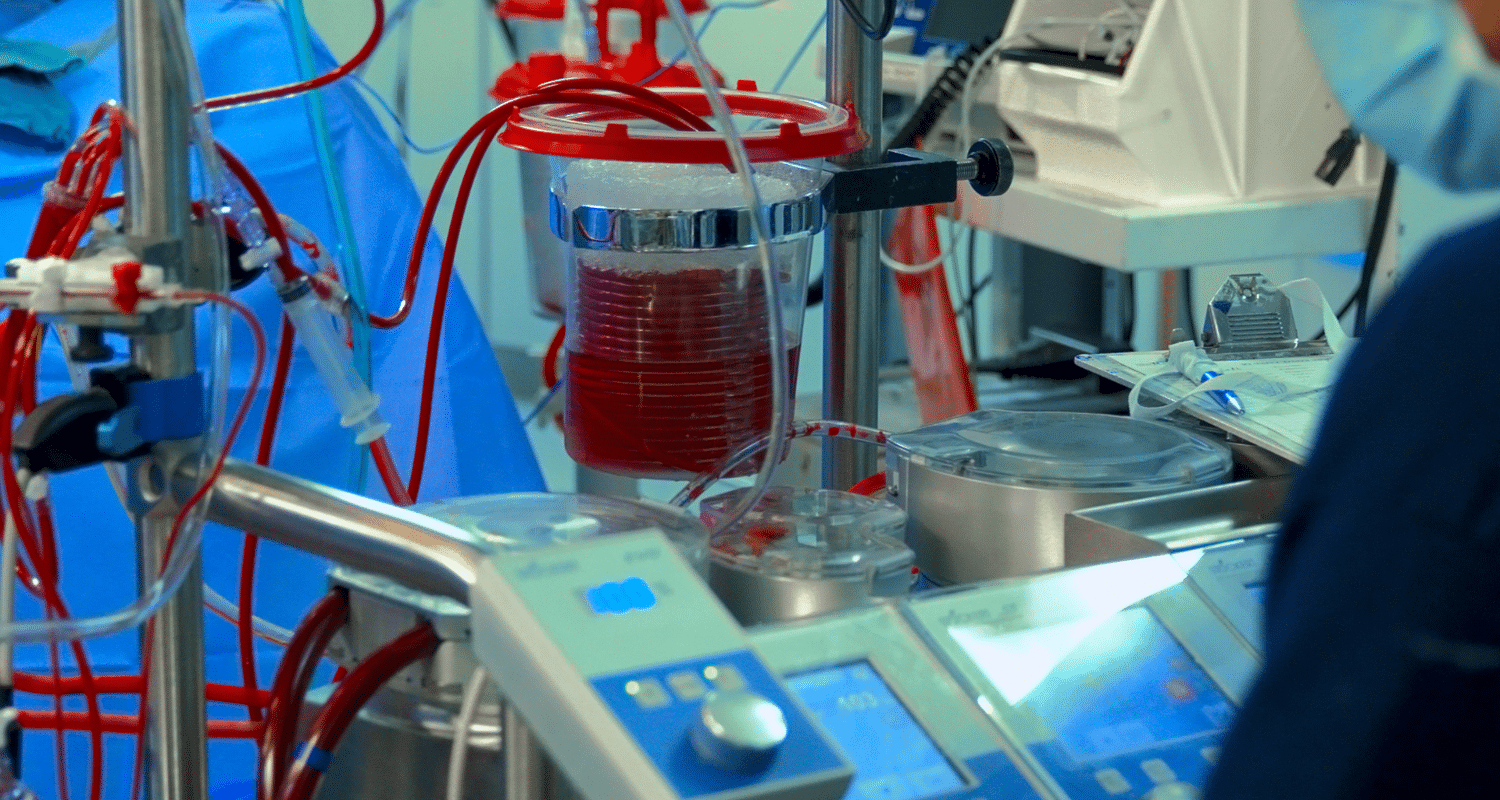
Venous Reservoir
This holding chamber collects blood before it moves through the rest of the circuit.
Oxygenator
This component adds oxygen to the blood and removes carbon dioxide, replacing the lungs’ normal function during surgery.
Roller Pump vs Centrifugal Pump
Roller pumps move blood by compressing tubing in a rolling motion, while centrifugal pumps use a spinning mechanism to generate flow. Each has its own advantages depending on the surgical team’s preference and the specific procedure.
Heat Exchanger
This component controls blood temperature throughout the procedure.
Arterial Filter
This filter removes air bubbles and debris from the blood before it returns to the patient, reducing the risk of complications.
Monitoring Systems
Continuous monitoring tracks pressure, flow, and other key parameters throughout the procedure, alerting the perfusion team to any changes that need attention.
Cardiopulmonary Bypass Circuit Explained
The bypass circuit follows a continuous pathway. Blood drains from the body, passes through the oxygenator and pump, moves through the heat exchanger and filter, then returns to the body through the arterial cannula. Pressure monitoring throughout the circuit helps the team catch problems early, and multiple safety mechanisms work together to prevent complications like air entering the bloodstream.
How the Heart-Lung Machine Is Used During Surgery
Before bypass begins, the team prepares the circuit and confirms all connections. Once bypass is initiated, blood flow gradually shifts from the heart to the machine. A solution called cardioplegia is then used to stop the heart safely, giving surgeons a still field to work on while the machine maintains circulation throughout the body.
Once the surgical repair is complete, the team gradually weans the patient off bypass, allowing the heart to resume its normal pumping function. The machine is then carefully disconnected once the heart is beating effectively on its own.
Procedures That Require Cardiopulmonary Bypass
Cardiopulmonary bypass supports many major heart surgeries, including:
- Coronary artery bypass grafting
- Heart valve replacement, often needed for heart valve regurgitation
- Valve repair procedures
- Repair of an aortic aneurysm
- Surgery for congenital heart defects, including conditions like ventricular septal defect or a bicuspid aortic valve
- Heart transplantation
Role of the Perfusionist
A perfusionist operates and monitors the bypass machine throughout surgery. This specialist tracks blood flow, oxygen delivery, and body temperature continuously, making adjustments as needed to keep the patient stable. Patient safety depends heavily on the perfusionist’s close attention throughout the entire procedure.
Cardiopulmonary Bypass Machine vs ECMO
| Feature | Cardiopulmonary Bypass | ECMO |
| Purpose | Supports circulation during surgery | Supports failing heart or lungs over an extended period |
| Duration | Hours, during a single surgery | Days to weeks |
| Location of use | Operating room | ICU, sometimes with transport capability |
| Blood flow | Fully controlled by the surgical team | Supports the patient’s own circulation alongside their heart and lungs |
| Patient condition | Often stable enough for planned surgery | Often critically ill with organ failure |
| Recovery | Machine removed at the end of surgery | Weaned gradually as the patient’s own function improves |
Benefits of Cardiopulmonary Bypass
This technology offers several important benefits, including making complex heart surgery possible, maintaining oxygen delivery throughout the body during the procedure, providing a bloodless surgical field for greater precision, supporting perfusion to all major organs, and improving overall surgical accuracy and outcomes.
Risks and Complications
While generally safe, cardiopulmonary bypass carries some risks, including bleeding, blood clot formation, stroke, air embolism, infection, an inflammatory response throughout the body, kidney injury, and in some cases neurological complications. The surgical and perfusion team works to minimize these risks through careful monitoring and established safety protocols.
Monitoring During Cardiopulmonary Bypass
Continuous monitoring during bypass tracks blood gases, oxygen saturation, activated clotting time, blood pressure, body temperature, electrolyte levels, and hemoglobin. This close tracking allows the team to catch and correct problems quickly throughout the procedure.
Safety Features of Modern CPB Machines
Modern bypass machines include several built in safety features, such as bubble detectors that catch air in the circuit, pressure alarms that flag abnormal readings, continuous flow monitoring, backup pumps in case of primary pump failure, electronic monitoring systems, and automated safety controls that respond quickly to changes during the procedure.
Recovery After Cardiopulmonary Bypass
After surgery, patients typically recover in the ICU under close monitoring. The heart needs time to recover its normal function, and many patients require temporary ventilator support immediately after surgery. Ongoing monitoring tracks heart function, fluid balance, and overall recovery. A structured rehabilitation program often follows, helping patients regain strength and activity levels gradually. Some patients experience temporary side effects such as fatigue or mild cognitive changes, which usually improve over time.