
Cardiac Stress Testing: Guide to Heart Stress Tests for Heart Attack Prevention
A cardiac stress test checks how well your heart works when it has to work harder than normal. Doctors use it to spot problems that a resting exam might miss.
Your heart can look fine while you sit still, then show warning signs the moment you push it. That is the whole point of stress testing. It puts your heart under a bit of pressure, on purpose, so doctors can watch how it responds before a bigger problem shows up on its own.
This test plays a large role in heart attack prevention. It helps catch reduced blood flow, weak spots in heart function, and rhythm problems that stay hidden during a normal checkup. Programs built around the BaleDoneen Method use stress testing alongside other markers to build a full picture of your risk, not just a single snapshot.
This guide covers what a cardiac stress test is, how it works, the different types available, what happens during the exam, and how to read your results.
What Is a Cardiac Stress Test?
A cardiac stress test is a medical exam that checks your heart’s activity while it works harder than usual. Most tests use exercise, often walking on a treadmill or pedaling a stationary bike, to raise your heart rate on purpose.
Doctors record your heart’s electrical activity, blood flow, and pumping strength while you exercise. This shows problems that only appear under physical demand, since a heart with a partial blockage can still look normal at rest.
This test connects directly to heart attack prevention. Reduced blood flow found during a stress test often points to narrowed arteries tied to coronary artery disease, a condition that can lead to a heart attack if it goes untreated.
How Does a Cardiac Stress Test Work?
During the test, sensors placed on your chest track your heart’s electrical signals through an electrocardiogram. This shows your heart rate, rhythm, and any unusual electrical patterns as your effort increases.
A blood pressure cuff checks your blood pressure at regular intervals throughout the test. Your care team also watches for symptoms such as chest pain, shortness of breath, or dizziness.
As your workload increases, either through exercise or medication, your heart needs more oxygen and beats faster. If a blocked or narrowed artery cannot supply enough blood, the heart tissue beyond that blockage does not get enough oxygen. This shows up as specific changes on the electrocardiogram or through imaging tests, giving doctors a clear signal of where the problem sits.
Why Is a Cardiac Stress Test Performed?
Doctors order stress tests for several reasons.
Chest pain evaluation. When a patient reports chest pain or pressure, a stress test helps determine whether the cause involves reduced blood flow to the heart, sometimes tied to angina pectoris.
Diagnosing coronary artery disease. The test helps confirm or rule out narrowed arteries that reduce blood flow to the heart muscle.
Checking silent problems. Some people have reduced blood flow with no symptoms at all, a pattern known as silent ischemia. A stress test can catch this before a silent problem turns into a sudden one.
Evaluating heart rhythm. Some rhythm problems, including certain arrhythmias, only show up when the heart works harder, making exercise the only way to catch them.
Measuring exercise capacity. The test shows how much physical activity your heart can safely handle, which helps guide a personalized exercise plan.
Monitoring known heart disease. Patients already diagnosed with heart disease may repeat stress tests over time to track how well treatment is working.
Pre surgery clearance. Some surgical programs require a stress test to confirm the heart can handle the demands of surgery and recovery.
What Can a Cardiac Stress Test Detect?
Reduced blood flow. The test can reveal narrowed arteries linked to atherosclerosis, often before a person notices any symptoms during daily life.
Heart rhythm problems. Exercise can bring out abnormal rhythms, including patterns linked to atrial fibrillation, that a resting exam would miss.
Pumping strength. Advanced stress tests measure how well the heart pumps blood under load, giving insight into ejection fraction and cardiac output.
Microvascular problems. Some patients have normal looking large arteries but still suffer reduced blood flow through tiny vessels, a pattern linked to coronary microvascular disease.
Overall fitness and risk. How your heart rate rises and recovers during the test gives doctors a general sense of cardiovascular fitness and future risk.
Types of Cardiac Stress Tests
Exercise Stress Test
This is the most common version. You walk on a treadmill or pedal a bike while your heart rate, rhythm, and blood pressure are tracked. The workload increases gradually until you reach a target heart rate or symptoms appear.
Pharmacological Stress Test
For patients who cannot exercise due to joint problems, poor mobility, or other health limits, doctors use medication instead. The medication makes the heart work harder in a similar way to exercise, allowing the same measurements to be taken.
Echocardiogram Stress Test
This version pairs a stress test with an ultrasound of the heart. Images are taken before and immediately after exertion, giving doctors a direct look at how well the heart walls move and pump under stress.
Nuclear Stress Test
A small amount of a radioactive tracer is injected into the bloodstream. Special cameras then create images showing how blood flows through the heart muscle, both at rest and during stress. This version gives one of the most detailed pictures of blood flow available outside of cardiac catheterization.
What Happens During a Cardiac Stress Test?
Before the Procedure
Avoid caffeine and heavy meals for several hours before the test, since caffeine can interfere with results. Wear comfortable clothing and walking shoes. Tell your doctor about any medications you take, since some may need to be paused before the test.
During the Procedure
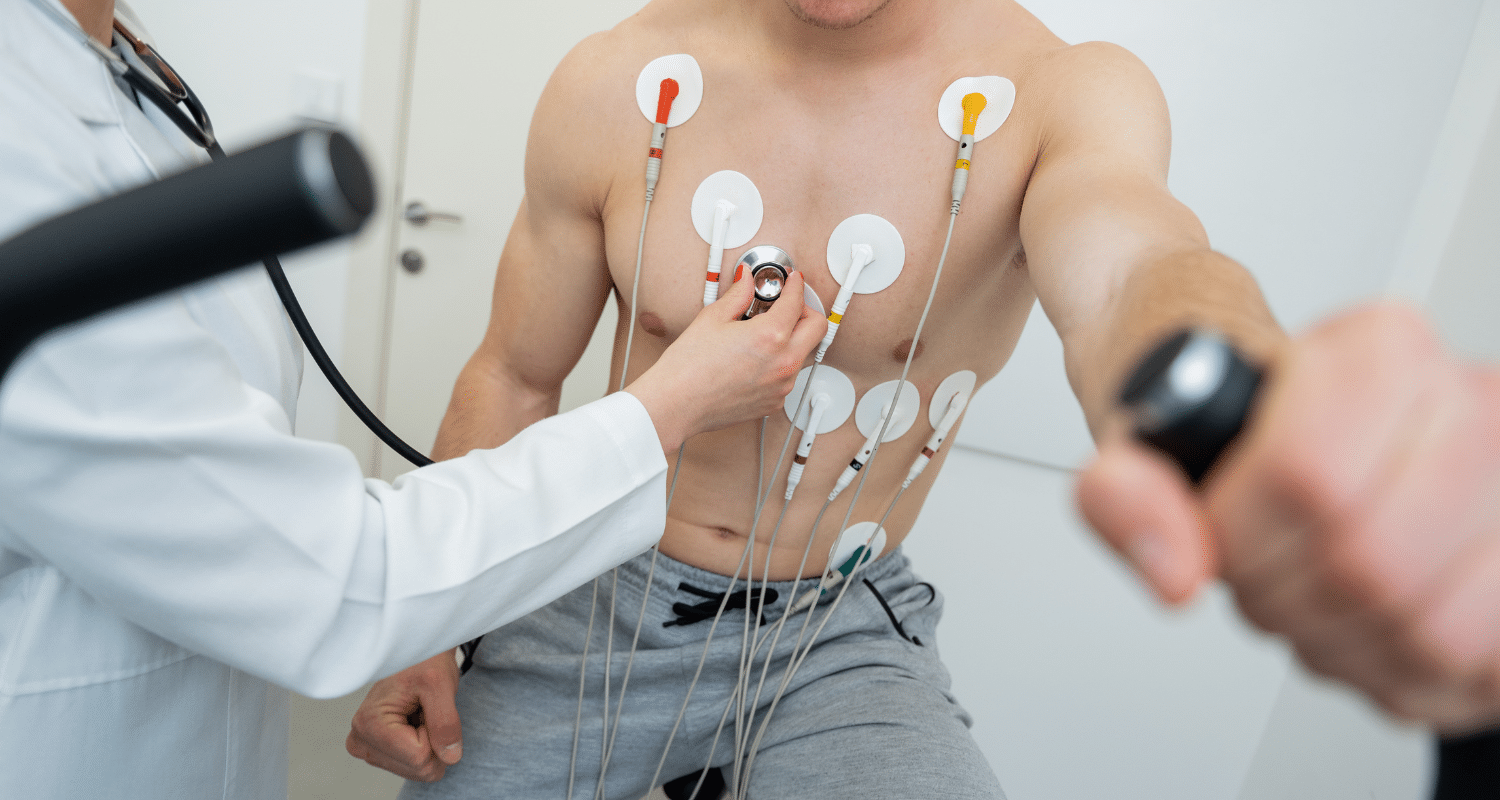
Sensors are placed on your chest to track your heart’s electrical activity. A blood pressure cuff is wrapped around your arm. You begin walking or pedaling at a slow pace, and the intensity increases every few minutes.
Your care team watches your heart rate, blood pressure, and symptoms closely throughout. The test continues until you reach a target heart rate, develop symptoms, or show concerning changes on the monitor.
After the Procedure
You will cool down slowly while your heart rate and blood pressure return to normal. Your care team continues monitoring for a short period after you stop exercising, since some changes only appear during recovery.
Most people return to normal activities the same day. Your doctor reviews the full results and discusses next steps at a follow up visit.
How Are Cardiac Stress Test Results Interpreted?
A normal stress test shows a steady rise in heart rate and blood pressure, no concerning symptoms, and no significant changes on the electrocardiogram or imaging.
An abnormal result may show specific patterns on the electrocardiogram, reduced blood flow on imaging, or symptoms such as chest pain or shortness of breath during exertion. These findings often lead to further testing, such as cardiac catheterization, to get a closer look at the arteries.
Your doctor also looks at how quickly your heart rate returns to normal after you stop. A slow recovery can be another sign worth watching closely.
Exercise Stress Test vs Pharmacological Stress Test
| Feature | Exercise Stress Test | Pharmacological Stress Test |
| Method | Treadmill or bike | Medication |
| Best for | Patients who can exercise | Patients with mobility limits |
| Information gained | Blood flow and exercise capacity | Blood flow only |
| Duration | Around 15 minutes of activity | Similar overall length |
| Preparation | Comfortable shoes and clothing | Same, plus medication review |
Doctors choose the version that best fits each patient’s ability and health history.
Benefits and Limitations
Cardiac stress tests offer real benefits. They are widely available, catch problems that rest alone would miss, and give a clear picture of exercise capacity and heart function under real demand. They support early heart attack prevention by finding narrowed arteries before a full blockage develops.
The test also has limits. It can miss smaller blockages that do not significantly reduce blood flow, and results depend partly on how hard a patient is able to push during exercise. For a fuller picture, doctors sometimes pair a stress test with other tools, such as advanced cardiovascular testing.
Stress, Your Heart, and Heart Attack Prevention
Physical stress during a treadmill test is not the only kind of stress that affects your heart. Ongoing emotional and psychological stress also plays a real role in heart attack risk over time, a link covered in more detail in our guide to psychosocial issues and heart health.
Chronic stress can raise blood pressure, increase inflammation, and affect habits like sleep and diet, all of which add up over time. Understanding both types of stress, physical exertion and daily emotional strain, gives a fuller view of your overall stress and heart health picture.
Many heart attacks happen without any warning signs beforehand, which is why programs focused on catching a silent heart attack rely on a full combination of testing rather than a single exam alone. If you notice new or unusual symptoms, review the full list of warning signs and symptoms and talk with your doctor.
Final Thoughts
A cardiac stress test gives doctors a clear look at how your heart performs under real demand, not just while at rest. It plays a key role in catching problems early and building an effective plan for heart attack prevention.
Stress testing works best as part of a complete approach to heart health, one that also looks at daily stress, lifestyle, and other risk markers. The BaleDoneen Method combines these pieces together to find and treat the root causes of heart disease before they lead to a heart attack or stroke.