
Surgical Retractors: Types, Uses, and Common Examples
A surgical retractor is an instrument that holds back skin, muscle, tissue, or organs during an operation. It creates space and light so the surgeon can see the area being treated.
Without retractors, tissue would fall back into the opening and block the view. They come in many shapes and sizes, and each is made for a certain job. This article explains what retractors do, the main types, common examples such as the Deaver and Balfour, the materials used, and how teams choose the right one.
This content is for general education. Instrument details and specifications should always be confirmed with the manufacturer.
What Is a Surgical Retractor?
A surgical retractor is a tool, usually metal, that pulls or pushes tissue out of the way. Some are held by hand. Others lock in place and hold themselves open.
Retractors help the team keep a steady view of the surgical site. They protect nearby tissue from injury and let the surgeon work with both hands free in many cases. Every surgical specialty uses them, from general surgery to dental work to heart surgery. They are part of the larger group of major surgical equipment found in an operating room.
What Are Surgical Retractors Used For?
Holding Back Skin and Soft Tissue
After the first cut, retractors hold the edges of skin and fat apart. This opens the path to deeper layers.
Separating Muscles and Deeper Tissue
Retractors spread muscle layers so the surgeon can reach organs, bones, or vessels beneath them.
Retracting Internal Organs
Some instruments move organs gently aside. This gives access to the target area without harming nearby organs.
Improving Visibility During Surgery
By holding tissue back, retractors let light reach the surgical field. A clear view supports accuracy and helps the team work safely.
What Are the Main Types of Surgical Retractors?
Retractors fall into three broad groups: handheld, self retaining, and fixed frame.
Handheld Surgical Retractors
A team member holds these in place. Common examples include:
- Army Navy retractor: a flat, double ended tool for shallow incisions
- Deaver retractor: a curved, wide blade for deeper work
- Richardson retractor: a broad blade often used in abdominal surgery
- Senn retractor: a small tool, often with a blunt end and a sharp end, for skin and small incisions
- Malleable ribbon retractor: a flexible strip that can be bent to shape
Self Retaining Surgical Retractors
These lock open and need no one to hold them. Examples include:
- Weitlaner retractor
- Gelpi retractor
- Balfour retractor
- Adson retractor
Fixed Frame Surgical Retractors
Fixed frame systems attach to the operating table or a mounted frame. They hold several blades at once and offer a stable opening for long cases.
- Bookwalter retractor: a ring based system used in abdominal and pelvic surgery
- Table mounted retractor systems: frames that clamp to the table rail
Common Surgical Retractor Names and Their Uses
Army Navy Retractor
This is a handheld, double ended tool with a blade on each end. Surgeons use it to hold back skin and tissue in shallow incisions.
Deaver Retractor
The Deaver is a handheld retractor with a wide, curved blade. It is often used to hold back organs and tissue in deeper abdominal and other body cavity procedures.
Richardson Retractor
The Richardson is handheld and has a broad, flat blade. Teams often use it to pull back the wall of the abdomen or deeper layers.
Weitlaner Retractor
This is a self retaining tool with two arms and a ratchet. Its prongs hold tissue apart in small to medium incisions, so no one has to hold it.
Gelpi Retractor
The Gelpi is a self retaining retractor with sharp tips on each arm. Surgeons often use it in deeper, narrow areas, such as spine and other orthopedic work.
Balfour Retractor
The Balfour is a self retaining abdominal retractor. It has a frame with side blades and often a center blade, and it holds the abdominal wall open during surgery.
Types of Surgical Retractors by Specialty
General and Abdominal Surgery Retractors
These include the Balfour, Richardson, and Deaver. They open the abdomen and hold organs away from the work area.
Orthopedic Retractors
Orthopedic surgeons use retractors to move muscle and protect nerves and vessels near bone. Gelpi and other designs are common.
Neurosurgical Retractors
Brain and spine procedures use fine, delicate retractors. Because tissue here is sensitive, these tools are small and made for gentle use.
Dental and Oral Surgery Retractors
Dental retractors hold back the cheeks, lips, and tongue. They help the dentist or oral surgeon see inside the mouth.
Cardiothoracic Retractors
Heart and chest surgery uses larger frames. A Morse sternal retractor style frame holds the breastbone open after a sternotomy. These procedures treat problems such as coronary artery disease and valvular heart disease.
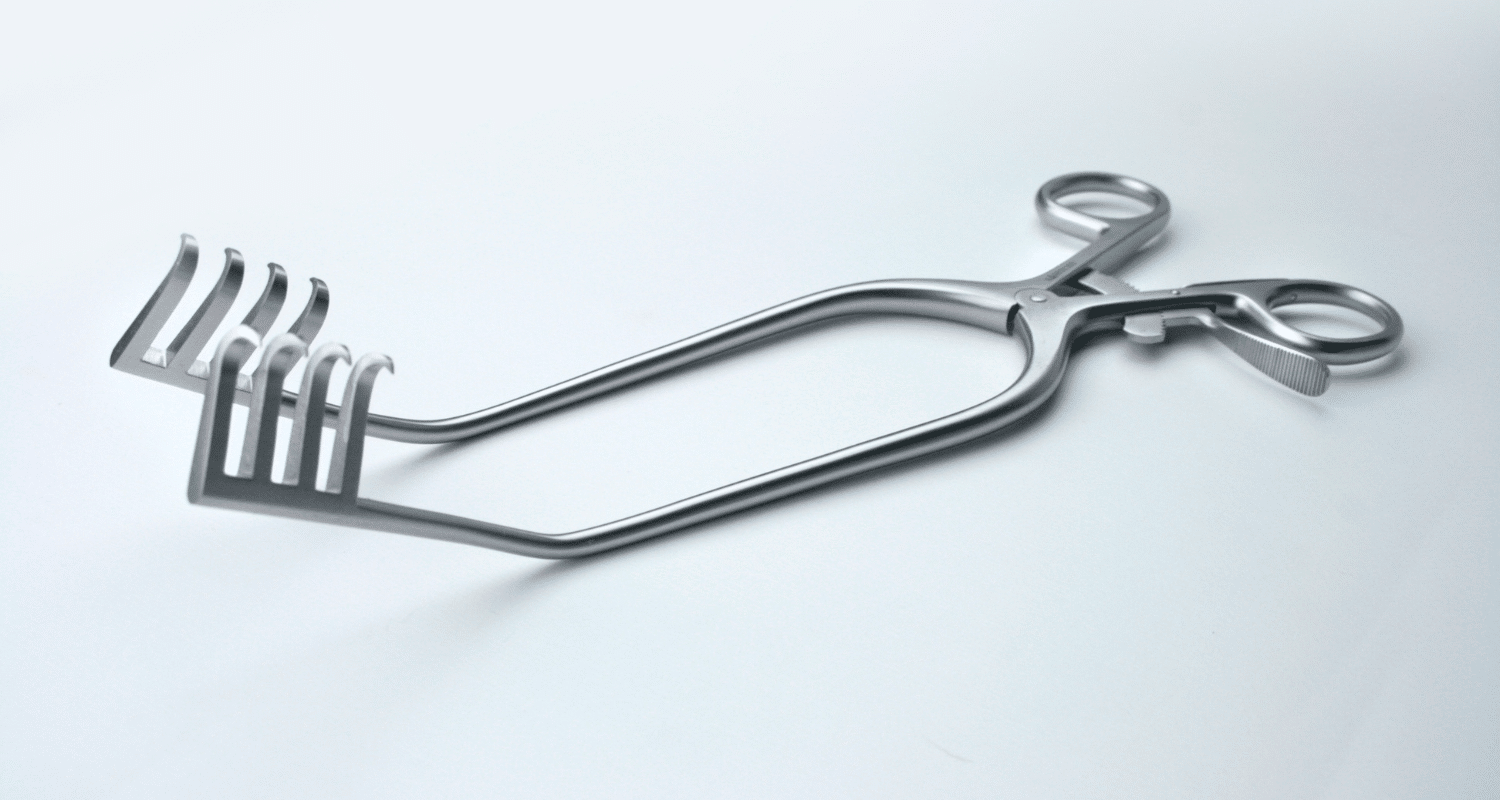
Handheld vs. Self Retaining Surgical Retractors
| Feature | Handheld | Self Retaining |
| How it is held | By a team member | Locks in place on its own |
| Assistant needed | Yes | Usually no |
| Stability | Depends on the person holding | Steady once locked |
| Common uses | Shallow or changing exposure | Longer cases needing steady exposure |
| Adjusting | Quick and easy | Done with a ratchet or screw |
| Examples | Deaver, Richardson, Army Navy | Weitlaner, Gelpi, Balfour |
Handheld tools let the team shift the view quickly. Self retaining tools give a stable opening for long operations and free up staff.
What Materials Are Surgical Retractors Made From?
Most retractors are made of stainless steel, including grades often called German stainless steel. It resists rust, holds a strong edge, and survives high heat sterilization.
Some tools use special plastics or other approved materials. Polymer options can be lightweight and are often made for single use. Reusable instruments need careful cleaning and inspection after every case. Staff should follow the manufacturer’s approved steps for cleaning and sterilization and check for cracks, bends, and worn parts.
How to Choose the Right Surgical Retractor
Teams usually look at the following:
- The surgical procedure and specialty
- Incision depth and tissue type
- Blade shape, size, and length
- Handheld or self retaining design
- Material, durability, and reprocessing needs
- Manufacturer specifications and quality standards
Always confirm details with the maker, since sizes and features vary by model.
Final Thoughts
Surgical retractors may look simple, but they are essential to safe surgery. Choosing the right type helps the team see clearly and protect healthy tissue.
Many operations on the heart and arteries happen after disease has already advanced. The BaleDoneen Method focuses on finding the root causes of artery disease early, with the goal of preventing a heart attack or stroke. Readers interested in prevention can find a provider trained in this approach.