Know Your Risk Before It Strikes
Your arteries could be hiding early disease. Find out today.
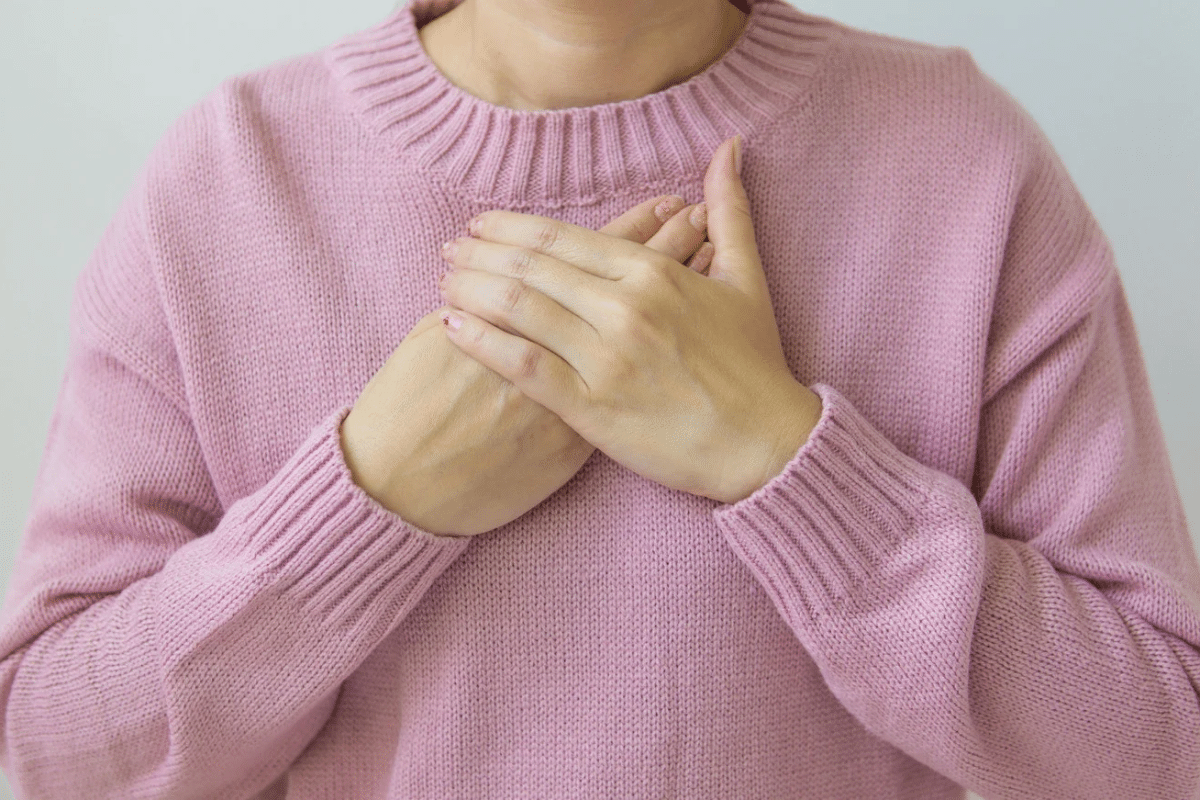
A tight chest can feel like a band squeezing around your ribs, a heavy weight on your breastbone, or a sense that you cannot take a full breath. The cause can be as simple as a strained muscle or acid reflux. It can also be the first warning of a blocked artery. Because the feeling is the same either way, the safest first step is to know which signs need help right now.
Call 911 now if chest tightness lasts more than a few minutes, keeps coming back, or comes with pain spreading to the arm, jaw, neck or back, shortness of breath, cold sweat, nausea or lightheadedness. Do not drive yourself.
When chest tightness is an emergency
Heart attack symptoms do not always look like the movies. Many people feel pressure or fullness rather than sharp pain. Women, people with diabetes and older adults are more likely to have quieter signs such as fatigue, nausea, jaw ache or shortness of breath. Read more about heart attack symptoms in women if you are unsure.
Tightness that starts with effort and eases with rest is also a red flag, even if it fades quickly. That pattern points to reduced blood flow to the heart muscle and should be checked within days, not months.
Heart causes of chest tightness
Angina
The most common heart cause is angina pectoris, a squeezing or heavy feeling that happens when the heart muscle does not get enough oxygen. It usually comes with climbing stairs, cold weather, a heavy meal or strong emotion.
Coronary Artery Disease
Angina is most often caused by plaque inside the heart arteries, known as coronary artery disease. Plaque can grow for decades without symptoms. The danger is not only narrowing. Soft, inflamed plaque can rupture and trigger a clot, which is how most heart attacks begin.
Small Vessel Disease
Some people, especially women, have chest tightness with clean-looking main arteries. The problem can sit in the tiny vessels of the heart, a condition called microvascular angina. Standard angiograms can miss it.
Other Heart Conditions
Inflammation of the sac around the heart, or pericarditis, causes sharp tightness that often eases when you lean forward. A sudden tearing pain that moves to the back can signal an aortic dissection, which is a surgical emergency.
Lung causes
Asthma narrows the airways and often feels like tightness with wheezing or cough. Chest infections such as bronchitis or pneumonia can do the same, usually with fever. A blood clot in the lung, or pulmonary embolism, causes sudden breathlessness and tightness that worsens with a deep breath. Recent surgery, long flights and leg swelling raise that risk.
Digestive causes
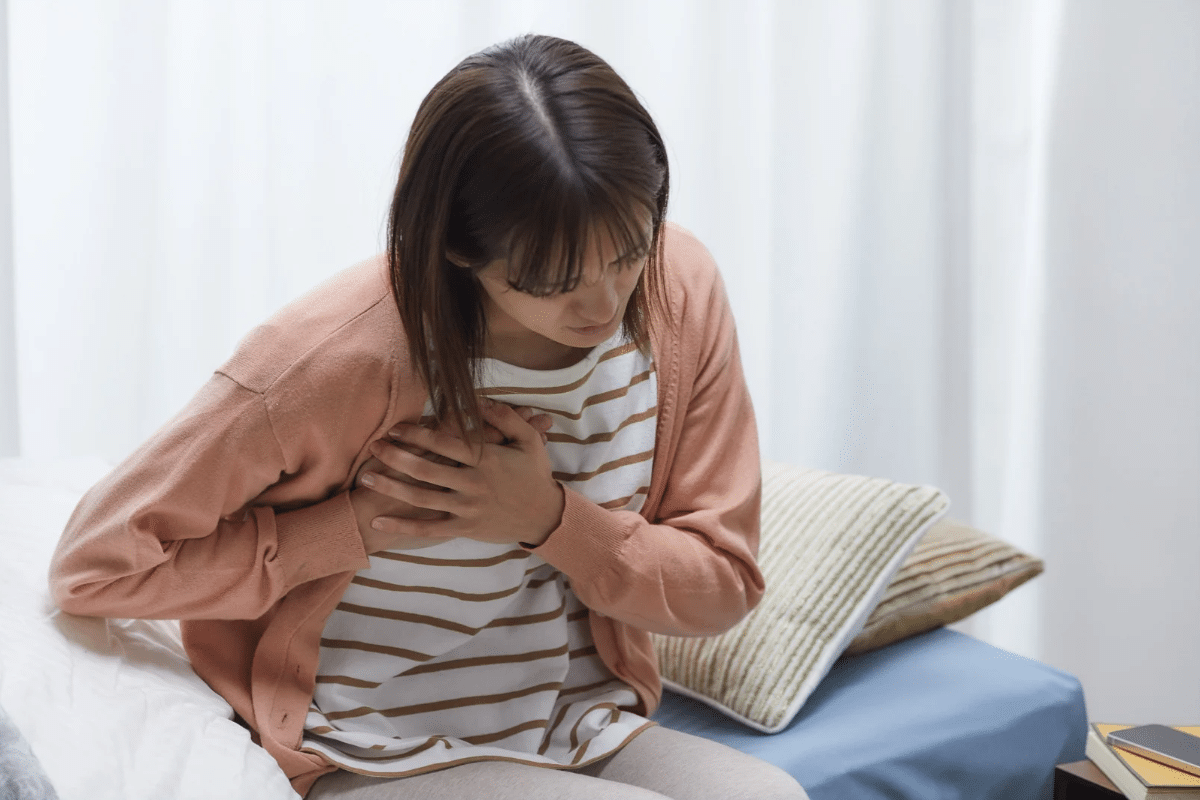
Acid reflux is one of the most frequent reasons for a tight or burning chest. It tends to appear after meals, when you lie down, or with a sour taste in the mouth. Spasm of the esophagus can feel almost identical to angina. That overlap is why doctors rule out the heart first and then look at the gut.
Muscle and chest wall causes
A strained muscle between the ribs, often after lifting, twisting or a hard cough, causes tightness that gets worse when you move or press on the spot. Costochondritis, an inflammation where the ribs meet the breastbone, behaves the same way. Pain you can reproduce with your finger is less likely to be cardiac, though it does not rule the heart out.
Anxiety and stress
Panic attacks release stress hormones that tense chest muscles, speed up breathing and raise the heart rate. The result can be a tight, smothering feeling with tingling hands and a racing pulse. It usually peaks within 10 minutes and fades as the panic settles.
Anxiety is real and treatable, but it should be a diagnosis made after the heart is checked, not before. Long-term stress also affects the arteries directly by raising blood pressure and inflammation. Our page on psychosocial stress and heart health explains that link.
How doctors find the cause
In the emergency room, an electrocardiogram (ECG) and a troponin blood test show within hours whether heart muscle is under strain. If those are normal, your doctor may order a stress test, a chest X-ray, lung function tests or a reflux workup, depending on your symptoms.
A normal ECG and stress test are reassuring for today. They do not tell you whether plaque is quietly building in your artery walls. Stress tests only turn positive once an artery is narrowed by roughly 70 percent, yet many heart attacks start in arteries that were far less blocked.
Finding hidden artery disease early
The BaleDoneen Method looks for disease inside the artery wall, not only for blockages. Two simple tests do that well:
- A CIMT scan, an ultrasound of the neck arteries that measures wall thickness and finds soft plaque with no radiation.
- A coronary calcium score, a quick CT scan that shows calcified plaque in the heart arteries.
We pair imaging with inflammation markers such as hs-CRP and Lp-PLA2, plus genetic and metabolic tests, to judge whether plaque is stable or likely to rupture. If you have had unexplained chest tightness, these tests can answer the question a normal stress test leaves open. Learn how we prevent a heart attack by treating these root causes.
Not sure where you stand? Take our free heart attack risk assessment. It takes about five minutes and gives you a personal report to bring to your doctor.
FAQs
Why does my chest feel tight but no pain?
Tightness without pain is common with anxiety, asthma, reflux and muscle strain. It can also be angina, which many people describe as pressure rather than pain. If it comes with exertion, shortness of breath or sweating, treat it as a heart symptom and get checked.
How do I know if chest tightness is anxiety or my heart?
Anxiety tightness often comes with racing thoughts, tingling hands and fast breathing, and fades within 10 to 20 minutes. Heart tightness often starts with effort and eases with rest. You cannot reliably tell them apart at home, so get a heart evaluation before assuming anxiety.
Why does my chest feel tight and heavy?
A heavy, pressing feeling is the classic description of angina, caused by reduced blood flow to the heart. Reflux and lung problems can feel heavy too. Heaviness that lasts more than a few minutes, or spreads to the arm or jaw, needs emergency care.
How can I relieve chest tightness at home?
Only after a serious cause is ruled out. For reflux, eat smaller meals and avoid lying down after eating. For muscle strain, rest and use heat. For anxiety, slow breathing (in for four seconds, out for six) helps. Never treat new chest tightness at home first.
Can high cholesterol cause chest tightness?
Cholesterol itself causes no feeling. It feeds plaque in the artery walls, and plaque can narrow arteries enough to cause angina. Many people with normal cholesterol still have plaque, which is why artery imaging gives a clearer picture than a lipid panel alone.
About the Author: Christine Cooper